Edwin Land was one of the main people behind the Polaroid Corporation. His career and interest in science is exceptional. Ousted from his own company, Land was interested in pushing the boundaries on what was possible with optics.
He invented the polarizer which so many film and photographers use. It is the reason LCDs can be read and 3D films work without red and blue glasses.
One of his more quirky discoveries was by accident. In the 01940s he and some assistances were working on a way to make color Polaroid film. 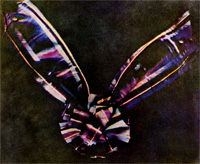 At the time, Polaroid only made black and white instant film (and sepia) and wanted to move into color. The first logical step was to replicate the same process. By taking three photos of the same object, but with 3 different filters; Red, Green and Blue, it was possible to later recombine these back into a color image. With red, green and blue light, it is possible to recreate the full spectrum. In 01855, the Scottish scientist James Clerk Maxwell was the first to create a color images from basic black and white images and in 01861 the first color photo of a tartan ribbon was made. It was over 100 years later, in 01963 that Polaroid made the peal-apart film, and in 01972 the color polaroid we’d recognize today.
To start his quest, Land thought that this was a good method and was developing an instant color camera that could make use of this three channel method. In the labs Edwin Land and his team were projecting three of the same image on to the wall with the different filters when someone bumped the apparatus and the blue and green filters were knocked off. What was left was a red channel and the black and white versions of the green and blue channels. To their utter amazement, the image still “felt” in color.
This was not possible since they knew there were only two colors being projected, a red channel and a grey channel. Yet clear as day there were the other colors!
Wendy Carlos, (Yeah, that Wendy Carlos from the MOOG, Switched-On Bach and Clockwork Orange) has an excellent write-up of ColorVision.
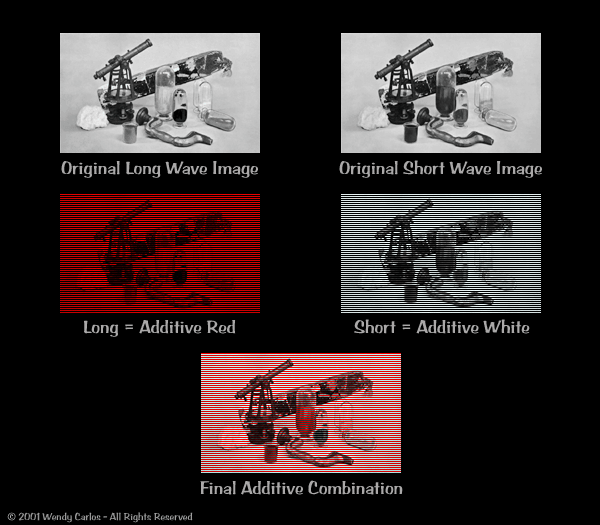
She repeats the process demonstrating how it’s possible to “see” color with only red and black and white.
In all these example, we’ve been using the color red, but it doesn’t matter if you use green or blue instead. The brain fills in the gaps no matter the extra color.
The Process
You can replicate this effect using any image editing software. Take your source image and duplicated it. The first image we convert to pure black and white. The other image we just want the red channel – so delete the blue and green. This is done either in channels, or channel mixer. At this point you should have two layers; black and white and red and black.
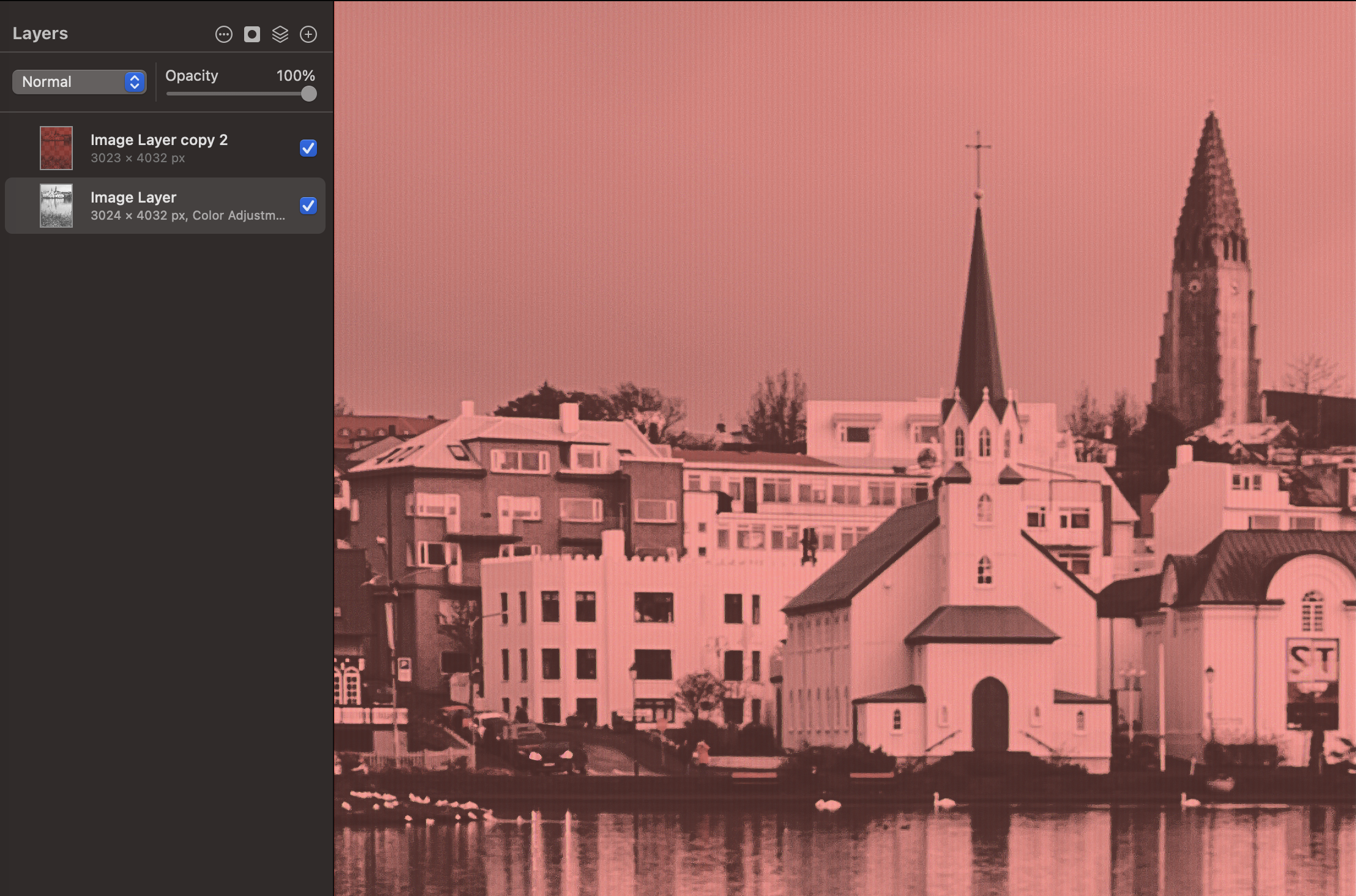
The last step is to remove every other line from one of the images and place it one a layer above there other. Depending on your software you can do a stripe generator or pattern fill of clear and black pixels. Then select all the black pixels lines and delete them.
This will leave you with a stripe of black and white, next to a stripe of red and black. When you step back, you can see color in the image! If your lines are too thin, you see more red. Zoom in on the image above and when you get close, all you’ll see is red and shades gray. There is no green or blue in the image.
Theory of Color
Edwin Land went on to describe how our brain perceves color and why when we look at a two color image we can see the full spectrum. Through the 01950s-70s he pitched his concept of “Retinex” – our eye’s didn’t see the color, our brains built the color. Even though we have rods and cones in our eye which sense various wavelengths, he showed that our brains still interpreted the color’s differently and fully when the wavelengths were or were not present.
As we’ve improved our knowledge of the brain and neuroscience, some of his theories we disproved as over simplifications, but others have been vindicated. Our brain plays a much bigger part of how we perceive colors than just our eyes.
BBC Horizons – Colourful Notations
In 01985, the BBC programme Horizons dedicated a whole episode to color and in it, Edwin Land demonstrates how they modeled their images off of James Clerk Maxwells’s original color image. He also digs into the Retinex theory, showing how in different lightening conditions are brains are still able to ‘see’ red in the same way.
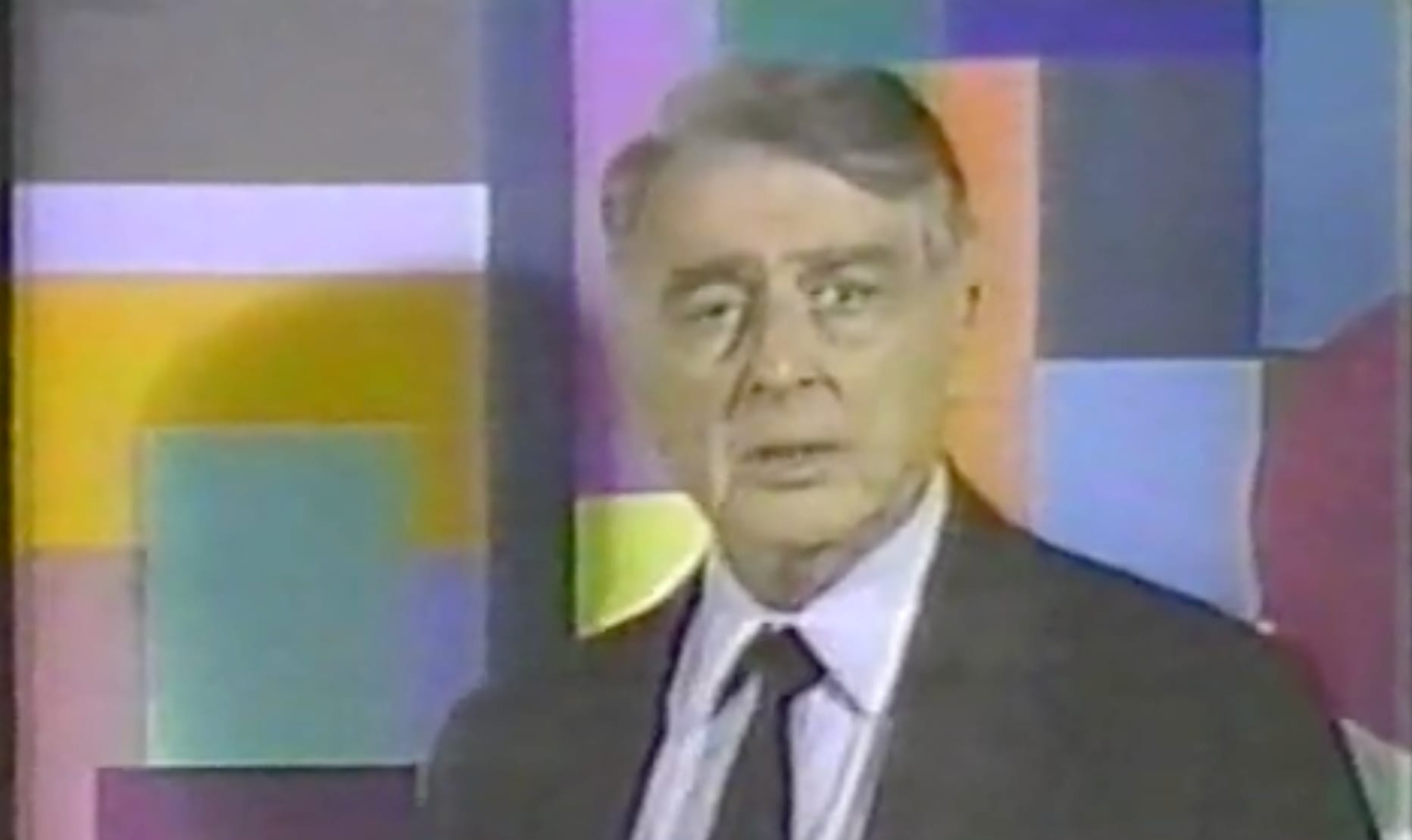
https://archive.org/details/BBCHorizonCollection512Episodes/BBC+Horizon+-+s1985e01+-+Colourful+Notions.avi It is episode 115, s1985e01
This show is 46 minutes and now 40 years old, but it is still incredible to see Edwin Land demonstrate this process and we can witness it for ourselves. The brain is doing a lot more color interpretation than we assumed.
Experimental Filters Camera App
Internally, we have a camera app which we are constantly tinkering with different features and filters. We added a shader to create the black and white and red stripes.
    float4 BWO(sampler ss) {
        float2 dc = ss.coord();          // destination pixel coordinate
        float4 s = ss.sample(dc);        // sample input image

        int yNormalized = int(dc.y * ss.size().y);

        if (yNormalized % 16 < 8) {
            float y = (0.299 * s.r + 0.587 * s.g + 0.114 * s.b);
            return float4(y, y, y, s.a);
        } else {
            return float4(s.r, 0.0, 0.0, s.a);
        }
    }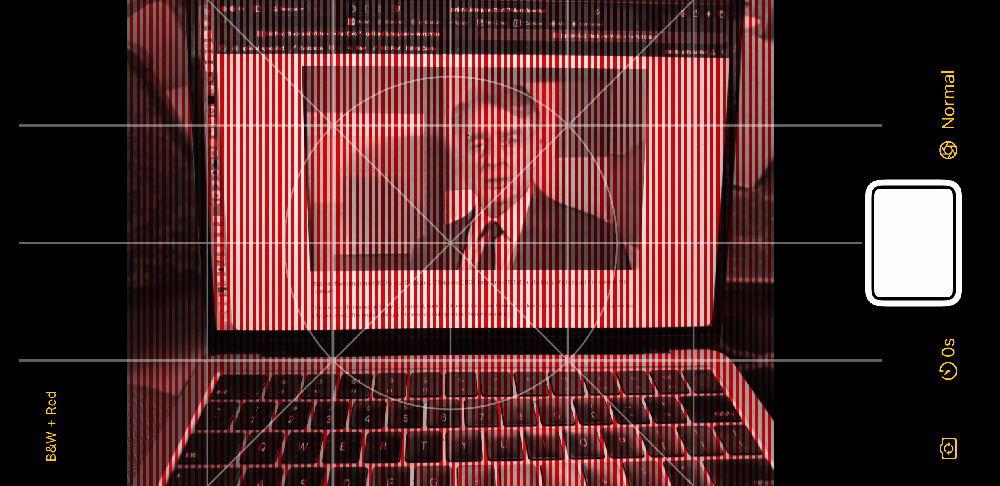
It’s a great little test app that we can use to experiment and emulate Edwin Land and Wendy Carlos.